

Acne vulgaris is a chronic inflammatory skin disorder that affects approximately 85% of individuals aged 12–24, often leading to significant psychosocial impacts like anxiety and depression. While conventional treatments such as retinoids and antibiotics are standard, they frequently cause localized irritation, dryness, and contribute to global antimicrobial resistance. To address these issues, Cannabidiol (CBD) has emerged as a potential solution due to its potent anti-inflammatory, antioxidant, and sebum-regulating properties. However, CBD’s therapeutic use is hindered by its high lipophilicity, poor aqueous solubility, and extreme instability when exposed to light or oxygen. This study explores the use of a thermoresponsive HA-pNIPAM nanogel as a delivery system, which was considered an answer to these challenges because it can encapsulate lipophilic molecules, shielding them from degradation while enhancing their cutaneous bioavailability and solubility.
Methods
Researchers developed a 3% w/w Hy-CBD gel using a patented HA-pNIPAM carrier and evaluated its biological activity via in vitro macrophage and keratinocyte models. A 7-day, open-label clinical study followed, involving 22 Asian participants with inflammatory acne who applied the formulation twice daily. Clinical assessments of lesion diameter, pigmentation, and skin tolerance were performed by a dermatologist at baseline, Day 2, and Day 7 using specialized imaging and scoring.
Key Findings
- Enhanced Biological Activity: The nanogel encapsulation significantly increased the anti-inflammatory and antioxidant effects of CBD compared to the free version of the compound.
- Rapid Lesion Reduction: Clinical results showed a 46% reduction in inflammatory lesion size by Day 7, with significant improvements noted as early as Day 2.
- Improved Skin Appearance: Participants experienced a 50% reduction in lesion color/redness and a nearly 79% improvement in lesion depth and topography by the end of the study.
- High Tolerability: The formulation was clinically tolerated by 100% of participants, showing no evidence of being comedogenic (clogging pores) or acnegenic.
- Subjective Satisfaction: All 22 participants reported a perceived reduction in acne severity and were satisfied with the non-sticky, quick-absorbing texture of the gel.
The novelty of this research lies in the successful integration of CBD into a thermoresponsive, hyaluronic acid-based nanogel platform, which effectively overcomes the historical barriers of CBD’s instability and poor skin penetration. By utilizing a carrier that self-assembles to protect the active ingredient, the study demonstrates a highly efficient delivery system that outperforms conventional vehicles. The future implications of this work suggest that Hy-CBD could serve as a safe, phytochemical-based alternative or adjunct to standard acne therapies. However, the researchers emphasize that larger, randomized, double-blind trials are necessary to confirm these preliminary findings and establish the long-term clinical efficacy and safety of this promising nanotechnology.
Link to the study: https://www.mdpi.com/2079-9284/13/4/165
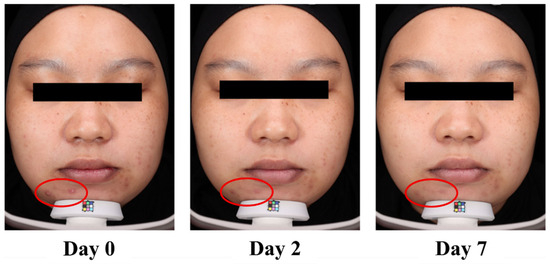
In the figure: Representative VISIA® photographic images showing lesion improvement at Day 0, Day 2, and Day 7 following treatment with the Hy-CBD gel.