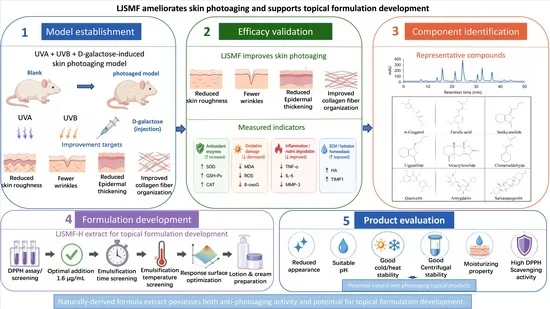
The skin acts as a vital barrier against external stimuli, yet long-term exposure to ultraviolet (UV) radiation triggers photoaging, characterized by roughness, deep wrinkles, and loss of elasticity. This process is driven by the accumulation of reactive oxygen species (ROS), which induces oxidative stress, chronic inflammation, and the upregulation of matrix metalloproteinases (MMPs) that degrade collagen. While traditional photoprotection is essential, it often fails to reverse existing damage, leading researchers to explore natural bioactive substances as restorative solutions. The study under review focuses on an optimized version of the traditional Lujiaosan formula, modified to comply with modern cosmetic regulations while leveraging its historical reputation for skin beautification. This natural extract was considered a potential answer because it offers a multi-pathway approach—targeting oxidative damage, inflammation, and extracellular matrix (ECM) imbalance simultaneously—which single-compound treatments often lack.
Methods
The researchers established a mouse photoaging model using combined UV irradiation and D-galactose, evaluating the protective effects of a modified extract (LJSMF) through histological, biochemical, and ELISA analyses. Representative chemical constituents were identified and quantified using HPLC, while the optimal loading level was determined via DPPH radical-scavenging assays. Finally, topical lotion and cream formulations were developed and optimized through response surface methodology (RSM) to ensure stability, suitable pH, and high sensory acceptability.
Key Findings
- Phenotypic Improvement: The extract significantly alleviated UV-induced skin roughness, wrinkle deepening, and epidermal thickening in the animal model.
- Enhanced Antioxidant Defense: Treatment increased the activities of essential enzymes like SOD, GSH-Px, and CAT, while reducing markers of lipid peroxidation (MDA) and oxidative DNA damage (8-oxoG).
- Anti-inflammatory and ECM Protection: The formulation suppressed inflammatory mediators (TNF-α and IL-6) and reduced MMP-3 levels, which helped preserve collagen fibers and increase hyaluronic acid (HA) content.
- Bioactive Composition: HPLC analysis identified nine representative constituents, including ferulic acid, quercetin, 6-gingerol, and ligustilide, providing a multi-component material basis for the observed efficacy.
- Formulation Feasibility: The optimized lotion and cream exhibited excellent physical stability, a skin-compatible pH (5.44–5.63), and high sensory scores for attributes like spreadability and absorbability.
The novelty of this research lies in its integrated strategy, which successfully links in vivo biological efficacy validation with practical topical formulation development within a single study. By modernizing a traditional formula, the authors demonstrated that naturally derived extracts can provide comprehensive protection against photoaging by modulating multiple signaling pathways. Future implications of this work include providing a scientific framework for developing high-performance natural cosmetics; however, the authors note that further long-term stability testing, microbiological evaluations, and human clinical trials are necessary before these formulations can reach the commercial market.
Link to the study: https://www.mdpi.com/2079-9284/13/4/163