

Skin aging is a multifaceted biological process driven by both internal and external factors, such as UV radiation and environmental pollutants, which trigger oxidative stress and inflammation. This stress leads to the overproduction of reactive oxygen species (ROS), resulting in lipid peroxidation, DNA damage, and the activation of enzymes like MMP-1 that degrade Type I collagen, ultimately causing wrinkles and loss of skin elasticity. To address these issues, Vegan Sesamcoll (SCP)—a plant-derived peptide preparation obtained from sesame (Sesamum indicum L.)—was investigated as a sustainable, “clean beauty” alternative to animal-derived ingredients. SCP was considered a potential solution because sesame-derived compounds are known for their antioxidant properties, and plant peptides can support extracellular matrix (ECM) homeostasis and skin integrity.
Methods
Vegan Sesamcoll was produced through alkaline extraction and enzymatic hydrolysis of sesame using food-grade protease, followed by characterization via amino acid analysis and MALDI-TOF/MS to determine molecular weight distribution. The preparation’s antioxidant capacity was measured using ABTS and DPPH radical scavenging assays. Finally, biological activities—including collagenase inhibition, Type I collagen synthesis, and HAS2/HAS3 protein production—were evaluated in vitro using human dermal fibroblasts (HDF) and epidermal keratinocytes (HEKn).
Key Findings
- Low Molecular Weight Composition: SCP consists primarily of small peptides, with approximately 60% of its molecular weight signals falling within the 200–399 Da range, which may facilitate biological activity.
- Rich Amino Acid Profile: The preparation is predominant in glutamic acid (33.32%) and aspartic acid (11.37%), containing a diverse array of amino acids characteristic of sesame.
- Dose-Dependent Antioxidant Activity: SCP demonstrated significant radical scavenging, reaching 60.1% activity in ABTS assays and 41.1% in DPPH assays at a concentration of 100 mg/mL.
- ECM Protection and Synthesis: In human skin cells, SCP inhibited collagenase activity by up to 99.57% (at a 10% concentration) and significantly increased Type I collagen production by approximately 6.2–8.5%.
- Enhanced Hydration Markers: Treatment with SCP significantly boosted the production of hyaluronan synthase 2 (HAS2) and 3 (HAS3), which are the primary enzymes responsible for hyaluronic acid biosynthesis in the skin.
The novelty of this research lies in it being the first study to specifically investigate the effects of Vegan Sesamcoll on HAS2/HAS3 protein production and its comprehensive role in maintaining collagen homeostasis. By demonstrating that a plant-derived peptide can simultaneously provide antioxidant protection, inhibit collagen degradation, and promote hydration-related markers, this study positions SCP as a high-potential, sustainable ingredient for the cosmetic industry. Future implications suggest that while these in vitro results are promising, subsequent research must include human clinical studies, bioavailability assessments, and deeper mechanistic investigations to fully validate its efficacy in finished cosmetic formulations.
Link to the study: https://www.mdpi.com/2079-9284/13/4/171
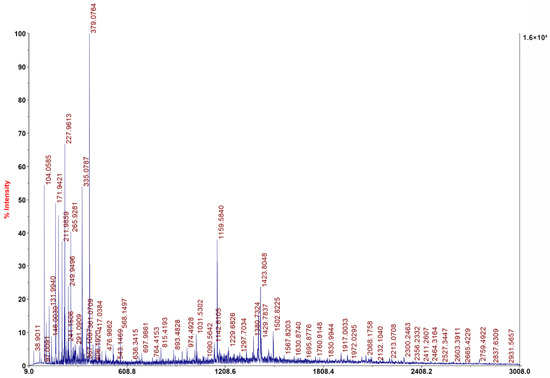
In the figure: MALDI-TOF/MS spectrum of SCP. The molecular weight distribution of SCP was analyzed using MALDI-TOF/MS. Representative mass spectra were acquired over the analyzed mass range.