

Aesthetic interventions using energy-based devices (EBDs), such as fractional CO2 laser (FCL) and radiofrequency microneedling (RFMN), rejuvenate skin by inducing controlled thermal injury to stimulate dermal remodeling. However, these procedures inherently cause transient side effects, including erythema, edema, and compromised skin barrier integrity. Asian skin specifically faces an increased risk of postinflammatory hyperpigmentation (PIH) if inflammation is prolonged or barrier recovery is delayed. To address these challenges, a serum containing TriHex Technology® (palmitoyl tripeptide-1 and palmitoyl hexapeptide-12) was evaluated as a potential solution. This peptide complex was chosen for its ability to support extracellular matrix (ECM) remodeling through a “remove–rebuild–replenish” mechanism, which clears damaged matrix fragments while stimulating the synthesis of new collagen and elastin.
Methods
Two prospective, randomized, evaluator-blind, split-face trials were conducted in China involving 51 subjects undergoing either FCL or RFMN treatments. One hemi-face received a tripeptide/hexapeptide serum in addition to a basic moisturizer, while the contralateral side served as a control using only the moisturizer. Evaluations included blinded clinical grading, subject self-assessments, and instrumental measurements of transepidermal water loss (TEWL) and redness over 14 days. This design allowed for a direct, intra-subject comparison of the serum’s efficacy in enhancing skin recovery and barrier repair.
Key Findings
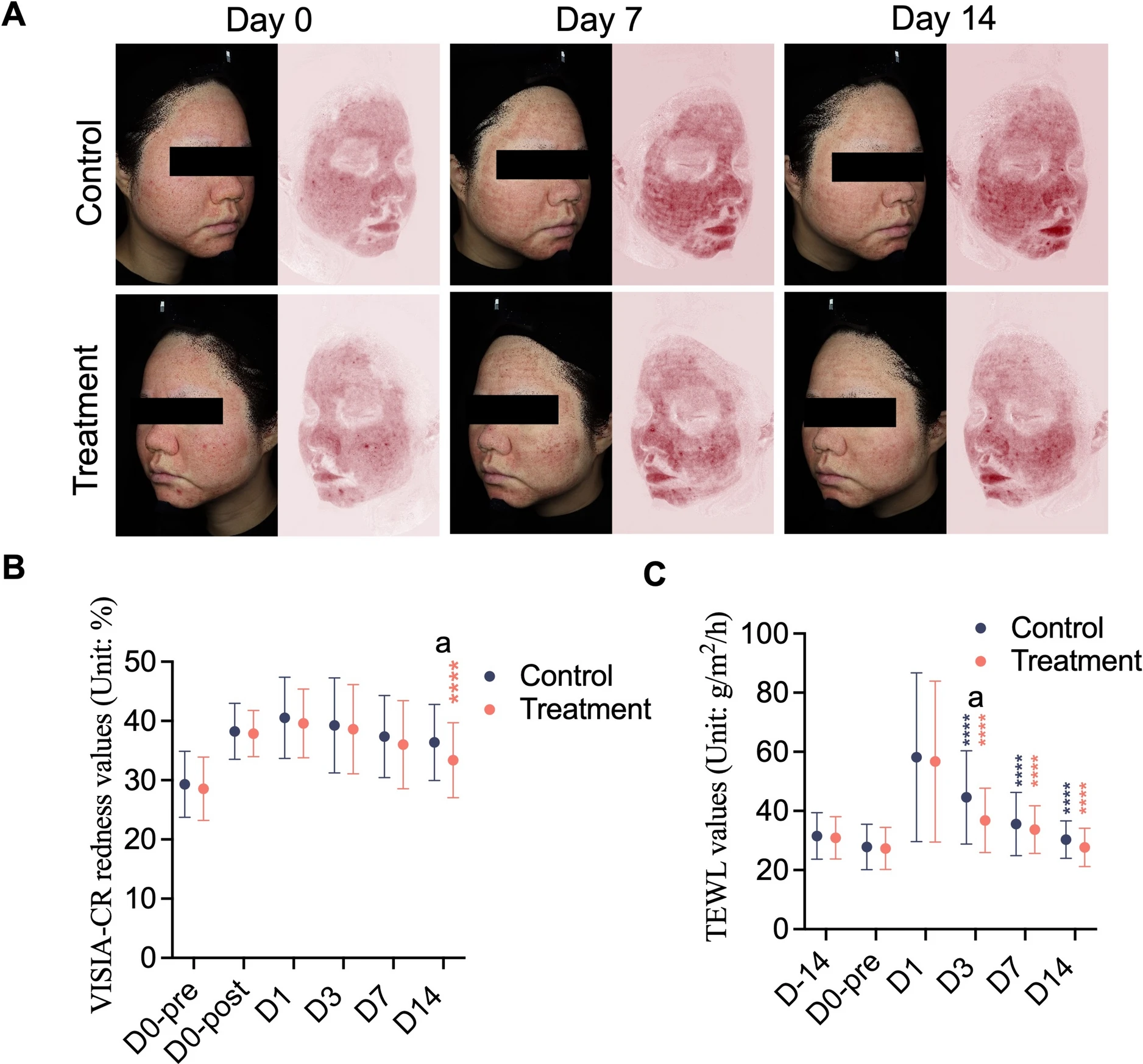
- Superior Barrier Recovery: In the FCL study, the serum-treated side showed significantly more complete TEWL recovery by day 3 compared to the moisturizer-alone side.
- Reduced Post-Procedure Edema: Significant reductions in edema were observed on the serum-treated side at day 14 for the FCL group and day 7 for the RFMN group.
- Improved Aesthetic Outcomes: At day 14 of the FCL study, the serum side demonstrated significantly greater improvements in tactile roughness and VISIA-measured redness.
- High Subject Satisfaction: By the end of the 14-day period, 81.8% of FCL subjects and 100% of RFMN subjects reported better overall relief and recovery on the side treated with the peptide serum.
- Favorable Safety Profile: The serum was well-tolerated in Asian skin, with only a few mild adverse events reported, most of which were deemed unrelated to the product.
The novelty of this research lies in its focus on Asian populations, for whom data regarding the efficacy of TriHex Technology® following common EBD procedures was previously limited. By demonstrating that the serum provides superior or comparable recovery to standard moisturization, the study highlights its value as a specialized periprocedural adjunct tailored to sensitive skin types. The future implication of these findings is the potential for standardized peptide-based regimens to minimize downtime and prevent complications like PIH. However, the authors note that further large-scale, controlled studies are warranted to fully validate these exploratory results.
Link to the study: https://link.springer.com/article/10.1007/s13555-026-01821-y
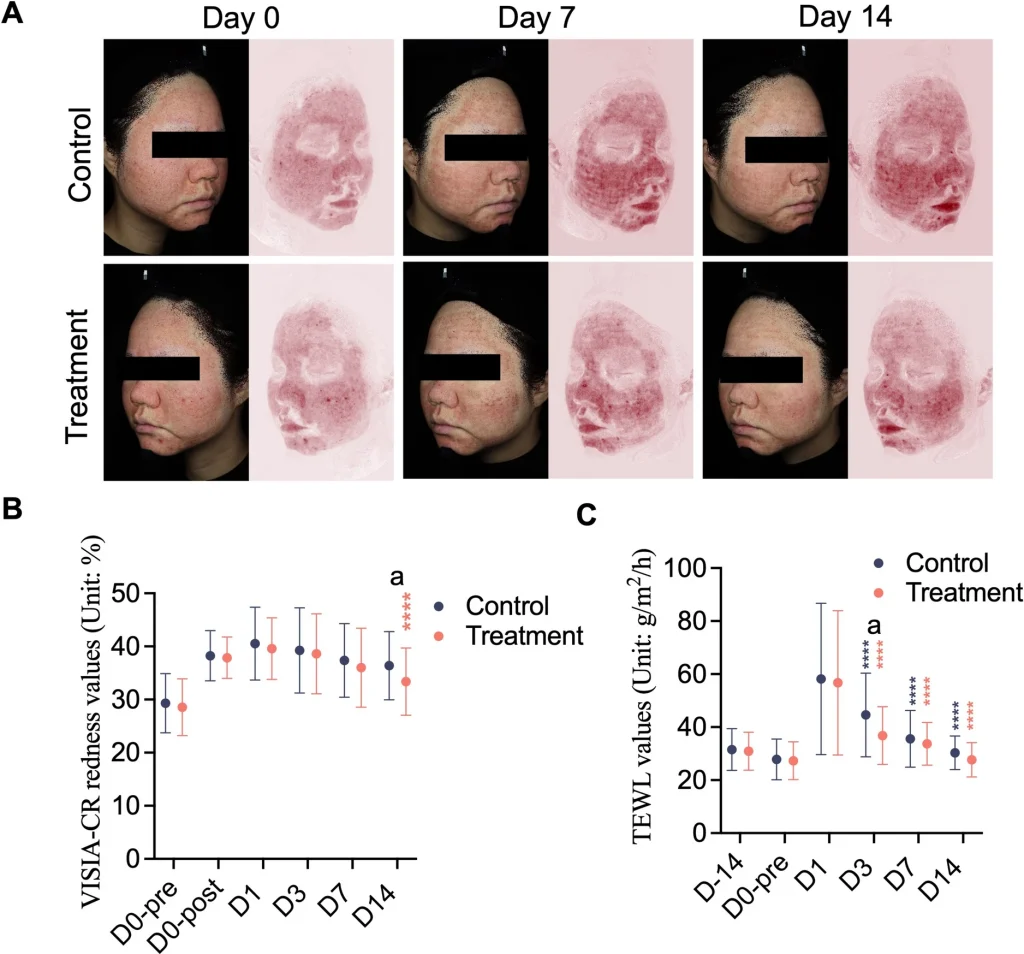
In the figure: Instrumental measurements for the FCL study. A VISIA-CR photos with cross-polarized lighting mode and red channel detection; B VISIA-CR redness values; C TEWL values. Control group represents moisturizer-alone-treated side and treatment group represents serum-treated side. Statistical significance was calculated for the control group and treatment group independently for days 1, 3, 7, and 14 compared with day 0 postprocedure, as indicated above the corresponding bar (***p < 0.05). Between-side comparisons were also calculated at each visit (a: nominal p < 0.05; see text for multiplicity-adjusted p-values and effect sizes)